BBC Football Tables: Complete Guide to Football League Standings
Football tables make it easy to understand how a league is going. Fans can quickly see which teams are leading. They can also track teams fighting for promotion or trying to avoid relegation. BBC football tables are popular because they present league information in a clear format. The tables help fans follow domestic leagues without reading long reports. You can usually find team positions, games played, wins, draws, losses, goals, and points. This information gives a quick view of the season. It also helps explain why one team sits above another. A football table can change after every match. One win can move a club several places. A single goal can also affect goal difference. For this reason, checking updated standings is useful throughout the season. This guide explains how football tables work and what every column means. It also covers fixtures, results, promotion, relegation, and common questions from football fans.
What Are BBC Football Tables?
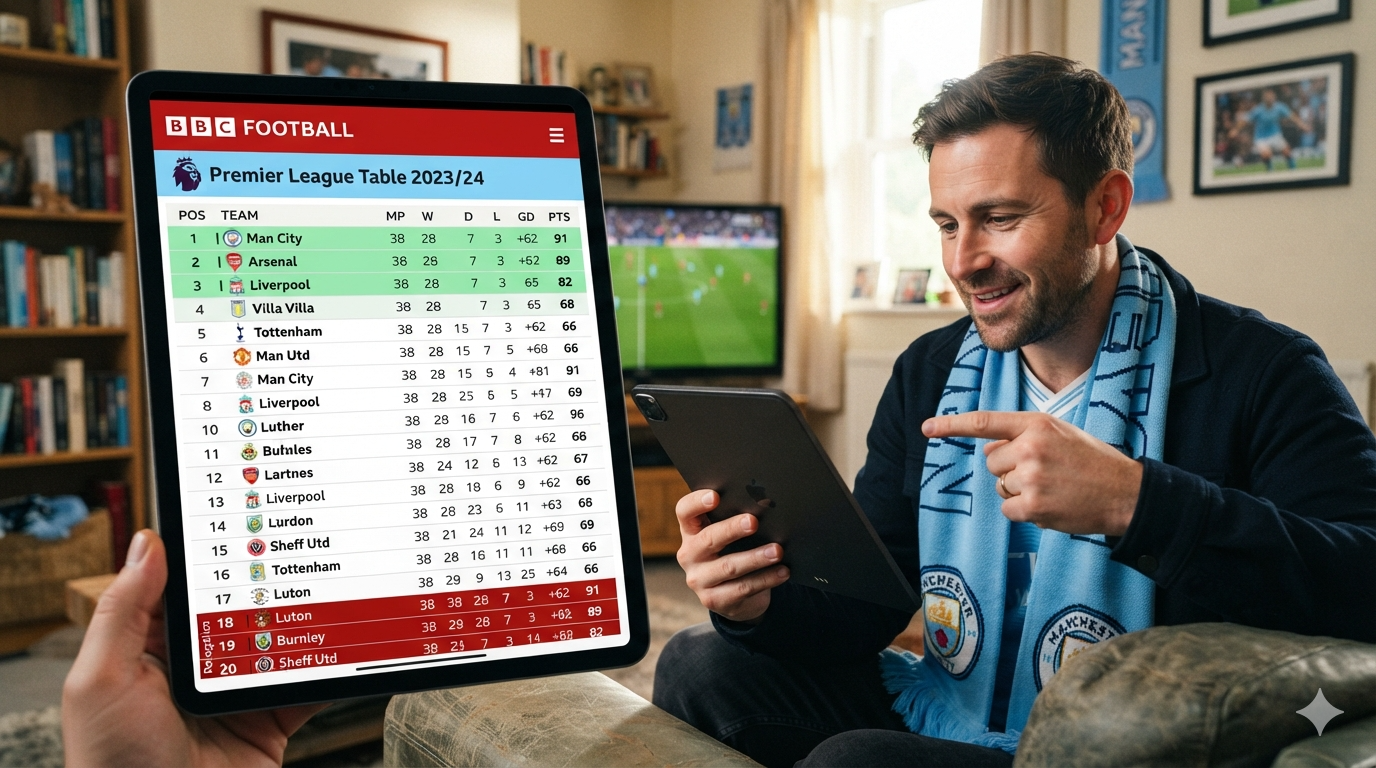
BBC football tables are league standings that help fans follow team performance. They organize clubs according to their current league position. The table normally starts with the team holding first place. Other teams follow based on their points and other ranking rules. Most football tables show several important columns. These include games played, wins, draws, losses, goals for, goals against, goal difference, and points. These numbers tell a simple story about each club. A team with many wins will usually have a strong points total. A team with many losses may sit near the bottom. The table is updated as matches finish. This means the order can change throughout the season. Fans can use the table to follow title races, European places, promotion battles, and relegation fights. The table is more than a list. It is a simple snapshot of a team’s season so far.
How to Read a Football League Table
Reading a football table is easier than it first appears. Each abbreviation normally represents a basic match statistic. P means games played. W means wins, while D means draws. L represents losses. GF means goals scored. GA means goals conceded. GD means goal difference. Pts means points. Points are usually the most important number when ranking teams. A win gives three points. A draw gives one point to each team. A loss gives no points. Goal difference becomes important when teams have the same number of points. For example, imagine two clubs both have 40 points. One has a goal difference of plus 20. The other has plus 10. The first team may rank higher under the competition rules. BBC football tables make these details easy to compare. Understanding each column helps fans judge team performance without needing complicated football statistics.
Why Points Matter So Much
Points provide the main foundation for most football league standings. Teams earn three points for winning a match. A draw gives one point to both clubs. Losing a match gives zero points. This system rewards teams that win games consistently. Consider a club that wins five matches. It earns 15 points from those games. Another club could draw all five matches and collect only five points. Both teams remain unbeaten, but the winning team gains much more. This shows why attacking for a win can matter during a long season. However, avoiding losses can also be valuable. A late equalizer can turn a zero-point match into one point. When reviewing BBC football tables, points give the quickest idea of league progress. Fans should still check games played and goal difference. Those figures provide useful context. A club with fewer games may have a different path to its current position.
Understanding Goal Difference
Goal difference is another important part of football standings. It is calculated by subtracting goals conceded from goals scored. For example, a team scoring 50 goals and conceding 30 has a goal difference of plus 20. A team scoring 30 and conceding 50 has a difference of minus 20. A positive goal difference often shows strong overall performance. It can reflect both good attacking play and solid defending. However, it does not always tell the complete story. Some teams win many close games and still have a modest goal difference. Other teams may record several large victories. Their goal difference can then become much higher. When clubs have equal points, competition rules decide the next ranking factor. This can include goal difference, goals scored, or other criteria. Therefore, fans should not assume the same rule applies everywhere. BBC football tables can help users compare these statistics quickly while following the latest standings.
Following the Premier League Table
The Premier League table receives huge attention from football fans worldwide. It shows how English top-flight clubs are performing during the season. Supporters often check the table after every matchday. The top positions can determine the title race and European qualification. Teams in the middle may fight for stronger finishes. Clubs near the bottom often face a different kind of pressure. They may be trying to avoid relegation. The table can also help fans understand the impact of a winning streak. A club that wins several matches can climb quickly. However, teams with difficult fixtures may drop several places. The Premier League season is long, so one result rarely decides everything. BBC football tables provide a useful way to monitor these changes. Fans can compare points, games played, goals, and goal difference. Looking at the table alongside recent results gives an even clearer picture.
Championship and Lower-League Standings
Football fans should not focus only on the Premier League. England has several professional divisions with their own important league tables. The Championship is especially competitive. Clubs battle for promotion to the top flight. Others fight to stay in the division. League One and League Two also feature promotion and relegation battles. These competitions can produce major changes during a season. A club near the playoff places may move higher after two wins. A short losing run can create pressure at the other end. BBC football tables can help supporters track these competitions in one place. Lower-league football also has its own stories and rivalries. Young players often gain valuable experience there. Clubs can build strong squads without the huge budgets found at the top level. This makes league position especially important. Every point can affect a club’s future plans, finances, and hopes.
How Promotion and Relegation Work
Promotion and relegation make football tables especially exciting. Promotion means moving into a higher division. Relegation means dropping into a lower division. The exact system depends on the competition. In many English leagues, the strongest teams earn automatic promotion. Other clubs may enter playoffs for additional promotion places. At the bottom, several teams can be relegated. Their final positions decide their fate after the season ends. This creates intense pressure during the final matches. A club can move from safety into danger within a single weekend. Likewise, a team can secure promotion before the final match. BBC football tables help fans track these important positions. The table can show which clubs are currently safe, which are in playoff places, and which face relegation. However, fans should check the competition’s official rules. Rules can vary between leagues and seasons.
Using Results Alongside Football Tables
A league table tells you where a team stands. Match results explain how it reached that position. Looking at both gives a much better picture. Suppose a club sits fifth after winning four straight games. Its position may suggest strong current form. Another club could sit third but have lost three of its last five matches. That team may be under pressure despite its higher position. This is why football fans often review recent results before judging a club. Fixtures also provide important context. A team may have played several difficult opponents. Another club may have faced easier matches. BBC football tables become more useful when combined with recent football results. Fans can identify winning runs, losing streaks, home form, and away form. These details help explain changes in league position. They also make match previews more meaningful. A table gives the bigger picture, while results show recent momentum.
Why League Position Can Change Quickly
Football league positions can change rapidly during a busy schedule. Several teams may have similar points totals. This means one match can affect many clubs. Imagine five teams separated by only three points. A single victory could move one club several places higher. A defeat could produce the opposite result. Midweek fixtures can create even more movement. Some clubs may have played fewer matches than their rivals. Their position may therefore look better or worse than expected. Fans should always check games played before drawing conclusions. BBC football tables can help make these differences visible. The table is especially interesting during the final weeks. Title races become tighter. Promotion battles can go down to the final day. Relegation fights can also remain undecided until late in the season. This uncertainty is one reason football league tables remain so engaging.
Comparing Teams Beyond the Table
A league position is useful, but it does not tell everything about a team. Fans can look at several other factors. Recent form is one important measure. Home and away records can also reveal differences. Goals scored may show attacking strength. Goals conceded can highlight defensive problems. Some clubs perform much better at home than away. Others may struggle against stronger opponents. Injuries and suspensions can also change results. Manager changes may affect team performance over time. Transfer activity can improve or weaken a squad. For deeper analysis, fans can study expected goals and other modern football statistics. These figures should support the basic table rather than replace it. BBC football tables provide a strong starting point for understanding a competition. Additional information can then help explain why a club is performing well or badly. This approach creates a more balanced view of football performance.
How Fixtures Affect League Standings
Fixtures are closely connected to league tables. Every scheduled match gives teams another chance to earn points. The difficulty of upcoming fixtures can influence expectations. A club facing several top teams may have a harder path. Another club with easier upcoming games may have more chances to collect points. Fixture congestion can also matter. Teams playing domestic cups and European competitions may have busy schedules. This can affect player fitness and squad rotation. Fans should therefore look beyond the current table. Checking upcoming fixtures can reveal possible changes. BBC football tables can be used alongside fixture information to follow a team’s next challenges. The final weeks are often the most dramatic. Clubs know exactly what they need from remaining matches. Some may need wins to secure promotion. Others may need points to survive. Understanding fixtures adds important context to the league standings.
Why Football Tables Are Useful for Fans
Football tables give fans a simple way to follow an entire competition. You do not need to watch every match to understand the basic situation. The standings show who is winning, who is improving, and who is struggling. They also help fans prepare for upcoming games. A supporter can quickly check the position of two teams before their match. This can add context to a rivalry or important fixture. Tables are also useful for journalists, analysts, coaches, and fantasy football players. They provide a common starting point for discussion. BBC football tables are particularly useful for fans who want information presented clearly. However, tables should always be viewed as changing information. A team’s position today may look different tomorrow. The best approach is to check current standings and recent results together. That gives a clearer and more reliable view of the competition.
Tips for Getting More From Football Standings
There are several simple ways to use football standings effectively. First, check the date and competition. Make sure the table is current. Next, look at games played before comparing teams. Then check points and goal difference. After that, review recent results. You can also examine upcoming fixtures. This gives you an idea of possible future movement. Avoid judging a team only by its position. A club may have played fewer matches than nearby rivals. Another team may have recently changed managers. Injuries can also affect future results. When using BBC football tables, combine the standings with other reliable football information. This creates a stronger understanding of each club. It also helps avoid common mistakes. Remember that league tables describe what has already happened. They do not guarantee what will happen next. Football remains unpredictable, which is part of its appeal.
Frequently Asked Questions About BBC Football Tables
1. What are BBC football tables used for?
BBC football tables show the current standings for football competitions. They normally include position, games played, wins, draws, losses, goals, goal difference, and points. Fans can use them to track title races, European places, promotion, playoffs, and relegation. The information provides a quick overview of team performance. However, standings can change after every completed match. It is best to check the latest table before making conclusions about a club’s position.
2. How are football teams ranked?
Teams are normally ranked by points first. A win gives three points, while a draw gives one point. A loss gives zero points. When teams have the same points, competition rules determine the next ranking criteria. Goal difference is commonly important in English football. Other rules may apply depending on the competition. Always check the specific league regulations when two teams have identical points.
3. What does GD mean in a football table?
GD means goal difference. It is calculated by subtracting goals conceded from goals scored. A team scoring 40 goals and conceding 25 has a goal difference of plus 15. A positive number usually indicates strong overall scoring results. However, goal difference is only one part of a team’s performance. Points remain the main measure used to rank teams.
4. Why do football tables change after matches?
Tables change because teams earn points from every completed league match. A win adds three points. A draw adds one point. A loss adds nothing. Goal difference can also change after every game. As a result, clubs can move up or down quickly. This is especially common when several teams have similar points totals.
5. Can a team move several places after one match?
Yes, a team can move several places after one match. This usually happens when many clubs have similar points totals. A victory can add three points and improve goal difference. Meanwhile, rival teams may lose their matches. The combination can create a major change in the standings. The effect is often stronger during the middle or final stages of a season.
6. Should fans check fixtures as well as tables?
Yes. Fixtures provide useful context for league standings. They show which opponents a team will face next. A club with difficult upcoming games may face a tougher challenge. Another club may have a more favorable schedule. Checking results, fixtures, and standings together gives fans a clearer picture of a team’s current situation.
Conclusion: Follow the Table and Understand the Season
Football tables turn a long season into an easy story. They show who is leading and who is chasing. They also highlight teams fighting for promotion or survival. BBC football tables can help fans follow these changes without complicated analysis. The most useful approach is to look beyond league position. Check points, goal difference, games played, recent results, and upcoming fixtures. Together, these details provide a much clearer picture. Remember that standings are constantly changing. A strong run can transform a club’s season. A few poor results can create pressure just as quickly. For football fans, this uncertainty creates much of the excitement. Keep checking the latest standings and compare them with recent results. That simple habit can make every match more meaningful. Whether you follow the Premier League, Championship, or another competition, the table is one of the best places to start understanding the season.